

Manufacturing ERP
Run the Business.
Connect the Factory..
One operational system from customer order to production floor.
Connect sales, purchasing, inventory, manufacturing, quality, maintenance and financial operations with real shop-floor production data.
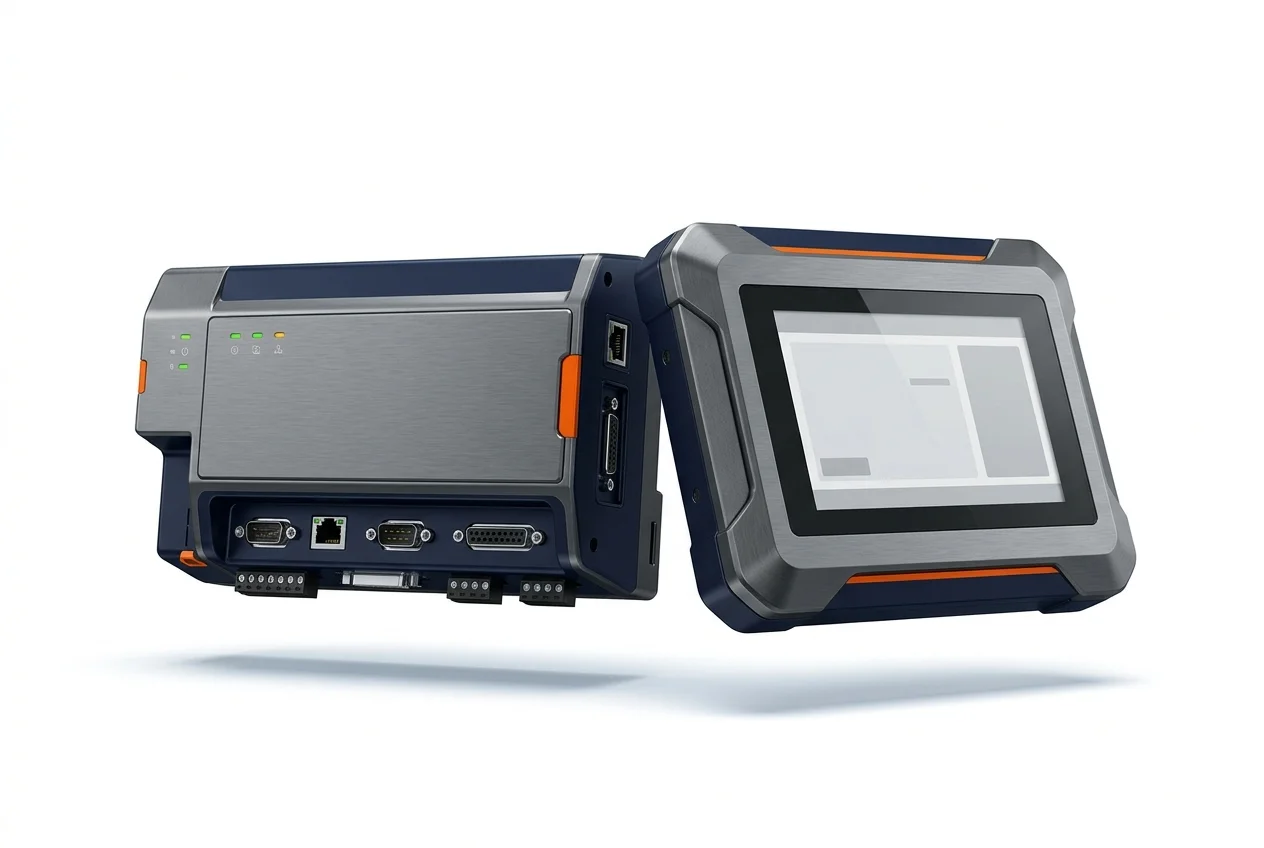
01 / Operational Foundation
A connected manufacturing operations platform.
Generic accounting software records what happened weeks after the fact. Traditional isolated ERP systems force supervisors to re-enter production tallies from paper logs at the end of each shift.
Swaelite Manufacturing ERP unites commercial business processes with shop-floor execution. Customer quotations translate directly into material plans, bill of materials (BOMs), work orders, and machine schedules—while live production counts, scrap, and downtime flow back into the ERP without manual duplication.
02 / Functional Modules
Core ERP capabilities across your enterprise.
Modular, scalable operational blocks structured specifically for discrete, batch, and process manufacturing environments:
Business Operations
01- CRM & customer relationship management
- Sales quotations & pricing rules
- Sales order confirmation & scheduling
- Customer account & dispatch records
- Purchase orders & vendor requests
- Supplier management & lead-time tracking
Manufacturing
02- Multi-level bill of materials (BOM)
- Operation routing & work centers
- Manufacturing orders & work orders
- Production scheduling & capacity planning
- Material requirements planning (MRP)
- Real-time work-order tracking on the floor
Inventory & Traceability
03- Multi-location & multi-warehouse inventory
- Warehouse bins, bays & internal transfers
- Batch and lot tracking with expiration dates
- Serial-number traceability from raw to finished
- Barcode and RFID scanning readiness
- Automated material movement & stock valuation
Quality
04- Incoming raw-material inspection workflows
- In-process quality checks at work centers
- Non-conformance report (NCR) workflows
- Rejection tracking & scrap categorization
- Digital quality logs & compliance certificates
Maintenance
05- Preventive maintenance calendar & alerts
- Corrective breakdown maintenance requests
- Machine equipment logs & MTBF / MTTR records
- Spare parts inventory & replacement tracking
- Technician assignment & service time logs
Finance & Costing
06- Customer invoicing & accounts receivable
- Vendor billing & purchase cost reconciliation
- Real-time inventory valuation (FIFO / Standard)
- Manufacturing labor, machine & overhead costing
- Operational profitability & margin visibility
Service & Project Operations
07- Field service dispatch & on-site logs
- Custom engineering & project milestones
- Customer support tickets & issue escalation
- Annual maintenance contracts (AMC)
- Warranty tracking & service history
03 / The Engineering Differentiator
Beyond generic software: factory-connected ERP.
Most ERP implementation firms stop at the office door. They understand accounting ledgers and purchase orders, but have never configured an industrial gateway, wired a PLC signal, or parsed an OPC UA node.
Swaelite bridges enterprise business applications with the physical equipment driving your revenue. We connect your ERP directly with:
04 / Unified Integration Layer
From machine data to business data.
A resilient multi-tier operational pipeline ensures raw sensor pulses and machine cycles become verified, audit-ready ERP production records:
Signals automatically exchanged between shop floor & ERP:
05 / End-to-End Execution
The enterprise manufacturing workflow.
From initial customer inquiry through engineering, production floor, and final financial dispatch:
06 / Operational Visibility
Actionable management intelligence.
When business software and machine data live in separate silos, leadership operates on gut feelings and outdated reports. Connecting both unlocks answers to critical everyday questions:
Which production orders are currently delayed or at risk?
Which raw materials or critical components are running low?
Which machines are causing unplanned production loss or downtime?
What is the true, actual cost per manufactured component?
Which customers have outstanding payments or credit holds?
Which suppliers are consistently delaying production schedules?
Which machines or work centers consume abnormal energy?
Where is work-in-progress (WIP) inventory physically located right now?
Which quality defects and rejection reasons are recurring across shifts?
07 / Implementation Strategy
Pragmatic technology approach.
We believe in industrial honesty. Swaelite does not market a proprietary, unvetted ERP built from scratch. Instead, we implement and tailor proven, enterprise-grade open foundations—such as Odoo and mature manufacturing ERP platforms—customized for your exact factory floor operations.
Our team takes end-to-end accountability across both software and physical infrastructure:
09 / Practical Questions
Know what to ask.
How does Manufacturing ERP differ from Machine-to-ERP Integration?
Machine-to-ERP Integration connects shop-floor equipment, PLCs, and SCADA signals to enterprise software. Manufacturing ERP is the core operational platform that manages the business: CRM, sales, procurement, inventory, BOM, routing, work orders, quality, maintenance, and costing. Swaelite provides both as a unified architecture.
Can this ERP connect with our existing factory machines and PLCs?
Yes. Swaelite connects ERP workflows directly to shop-floor hardware—including PLCs, CNCs, VMCs, SCADA systems, industrial edge gateways, barcode scanners, and energy meters—allowing production output, scrap, downtime, and cycle counts to flow automatically into business records.
What ERP foundation does Swaelite implement?
We implement mature, battle-tested ERP platforms—such as Odoo Enterprise/Community—customizing manufacturing workflows, warehouse structures, and accounting rules, while engineering direct shop-floor hardware integration that generic ERP consultants cannot provide.
Can we start with a small implementation and expand gradually?
Yes. A typical engagement begins with core inventory, bill of materials (BOM), and production work orders, before expanding into automated machine connectivity, quality workflows, and preventive maintenance scheduling.
Ready to unify your business and factory?
Discuss your manufacturing operations, machine interfaces, and operational objectives with our engineering team in Ahmedabad.
Discuss Your ERP Requirements Explore all solutions →