Industrial IoT / AI-assisted worker safety
Support safety checks.
AI-assisted safety monitoring uses camera analysis to flag an agreed visual condition for a person to review. Examples include a possible missing helmet at a designated entry point or entry into a defined area.
Discuss this service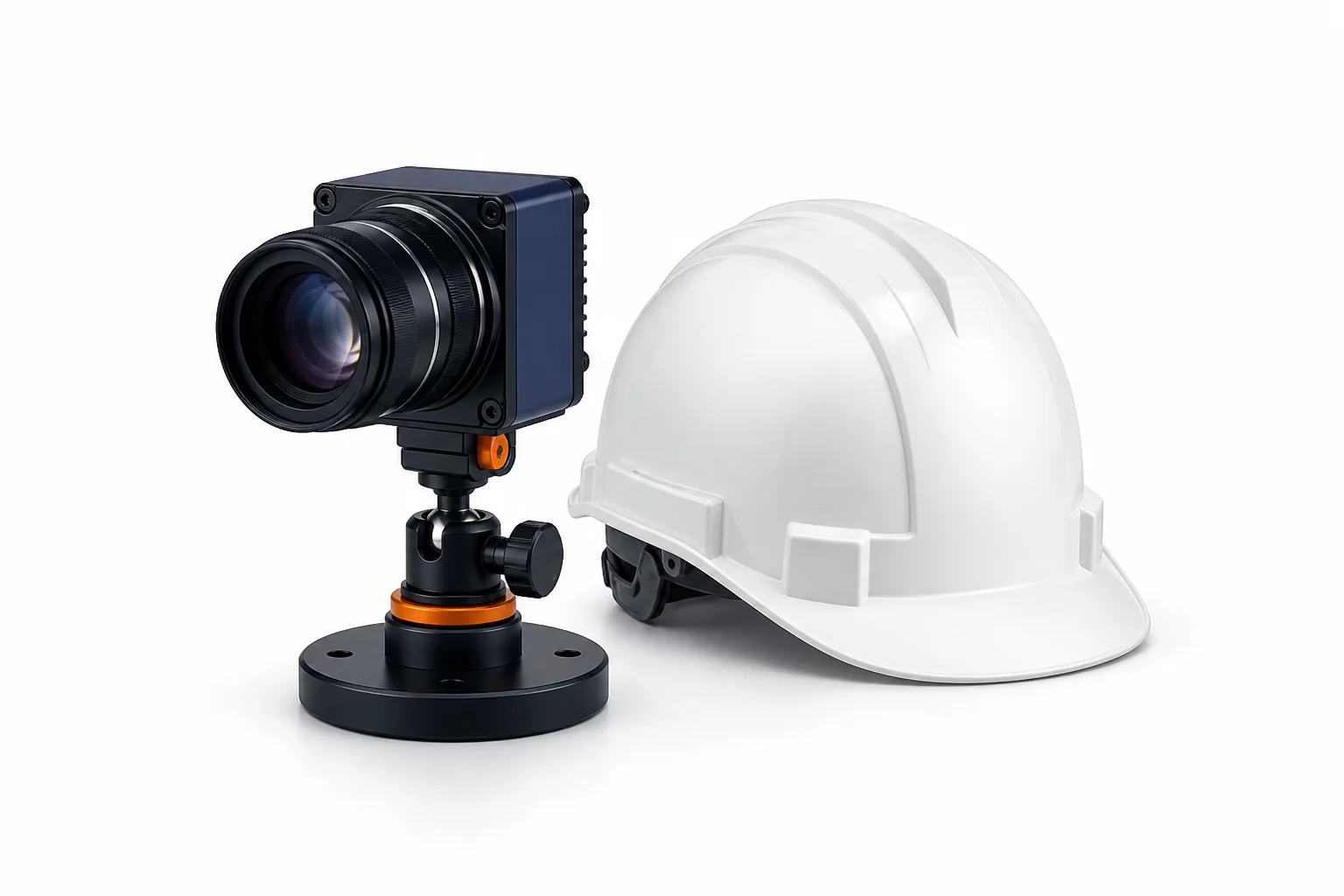
01 / In plain language
What is ai-assisted worker safety?
AI-assisted safety monitoring uses camera analysis to flag an agreed visual condition for a person to review. Examples include a possible missing helmet at a designated entry point or entry into a defined area.
A potential additional input for an existing safety team when the observation is clearly defined and camera use is appropriate for the workplace.
02 / Before we begin
A useful starting point.
Bring these details to the first conversation:
- The specific observation and how a reviewer will respond
- Camera views, lighting, obstructions and the relevant work area
- Workplace permissions, privacy requirements and image-retention decisions
Explore a helmet check at a designated entry point, with alerts reviewed by a supervisor.
03 / The approach
Define. Connect. Review.
- 01
Define one reviewable event
Describe exactly what should be flagged and who is responsible for assessing the alert.
- 02
Assess the working conditions
Check camera position, image quality, protective-equipment variation and the likelihood of obstructed views.
- 03
Evaluate before expanding
Review missed events and false alerts in the intended setting. Decide whether the result is useful enough to support the existing process.
What to establish before proceeding
Camera analysis can miss events or produce false alerts. It does not replace protective equipment, physical safeguards, trained supervision or required safety procedures. Suitability and privacy must be reviewed before use.
04 / Practical questions
Know what to ask.
Does this replace a safety officer?
No. People remain responsible for assessing conditions and responding. The system is an additional review aid. Camera analysis can miss events or raise false alerts. Your team must assess suitability, define a response and retain existing protective equipment, physical safeguards and required safety procedures.
Can existing cameras be used?
Possibly, depending on image quality, view, access and suitability for the agreed observation. Existing cameras are assessed before any recommendation. Check lighting, obstructions and protective equipment variation in the intended work area. Agree workplace permissions, image retention and who reviews flagged events before use.
05 / Where this applies
Related industries.
Start with your equipment.
Tell us what is difficult to see or keep track of. We can discuss whether this is a useful place to begin.
Prepare an enquiry ↗Explore all services →